

Food Packaging Materials Working Group
Chair
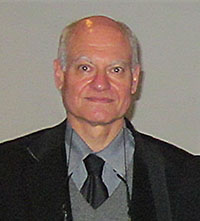
Prof. MSc. Alejandro Ariosti
Argentina
Vice Chair

OMIDIRAN Adebukola Tolulope (Ph.D.)
Food Quality Control, Safety and Assurance,
Department of Food Science & Technology,
Federal University of Agriculture, Abeokuta.
Nigeria
Biography
Dr. Adebukola Tolulope Omidiran is a Senior Lecturer in the department of Food Science and Technology, Federal University of Agriculture, Abeokuta. Nigeria, whose area of interests cut across value addition to indigenous food crops, food nutrition, quality control, assurance and safety. She is an ARIFA (Agricultural Research and Innovation Fellowship for Africa) fellow, Programme Leader, Food Processing and Value Addition, Centre of Excellence in Agricultural Development and Sustainable Environment (CEADESE), FUNAAB and Vice-Chairperson, Technical Committee on National Food Fortification Program, Standard Organisation of Nigeria.
Also, she is a professional member of International Society for Tropical root crops, Organization of Women in Science for Developing World (OWSD), consumer perceptions and Food packaging working group of the Global Harmonization Initiative (GHI) and Nigerian Institute of Food Science and Technology; Staff adviser, Nigerian Red Cross society, FUNAAB detachment and a member of ‘diversification of egg marketing and pilot scale assessment of a novel egg drying technology in Nigeria’, sponsored by TETFund. She was a recipient of Orange Knowledge Program (OKP) scholarships.
Mission
In industrialized and developing countries alike, almost all fresh and processed foods are delivered to consumers in some form of packaging in a wide variety of shapes, structures and materials. Food packaging has been defined as a service that displaces food consumption in time (related to shelf-life) and space (related to different markets).
In the same way that packaging contains, protects and advertises food, it also interacts with the product and the surrounding environment. One of the most important interactions, from a hygiene point-of-view, is migration of components (organic and inorganic substances of low molecular weight, heavy metals and other elements, etc.) from the packaging on or into the food. Thus, food packaging belongs to the wider category of food contact materials (FCMs).
Countries and regional blocks have different types of FCMs regulations, standards and recommendations, or none at all. As Codex Alimentarius does not address food packaging issues practically, regulations are diverse and based on different risk assessment strategies. In countries with emerging food packaging regulations, international references have been considered in developing the legislation. Lack of harmonization among these regulations might pose risks to human health, food hygiene, quality and fair international trade.
Topics & Objectives
The main objective of GHI WGs is to provide a space for members and other experts to collaborate with colleagues from academia, government, industry, etc. to build consensus. GHI WG Food Packaging Materials is seeking to achieve agreement on the scientific principles that should underpin regulatory decision-making for FCM including packaging. Such collaborations, between regulators and the scientific community, as well as society in general, is possible through publication of white papers and scientific opinions etc., which are independent. These are made available via GHI communication channels, including websites of associated organisations and scientific presentations.
Meetings
Dates, times and locations to be announced.
Interested in joining this Working Group?
If you have suggestions or are interested in joining our efforts and contributing constructively to our Working Group, please contact the Working Group Chair or the Working Group Coordinator via email. Your request will be reviewed to ensure that your expertise is matched to this WG area of interest.
Only registered members of GHI are eligible to join its Working Groups. If you are not already a GHI member, click here to join our global community of scientists and experts. There is no fee to join GHI.
Members of Working Groups, like all GHI members, do not represent their employers.
Membership is individual and contributions to GHI are based on the scientific conscience of the members.